A day-care website where you can already feel the day.
People who visit a day-care website mainly want to know what a day looks like. An older person who is unsure wants to see whether there is something to do that suits him. A daughter wants to know whether her mother will be picked up and brought home. A dementia case manager wants to know which day still has a place.
Zorgvorm builds websites for day-care centres and care farms that answer those three questions, with a trial day visitors book themselves and a team side where the day plan and transport list keep up. Below you can read what we often hear, what you can try in our example and what we check first.
What we hear most often.
Three problems that keep coming back, in the words of the people who deal with them.
Referrers do not know where there is room
“I email four locations and only hear a week later that Tuesday is full.”
Case managers, practice nurses and Wmo consultants look for a place on a fixed day for someone who is struggling at home. If nothing shows how many places there are per day, every referral turns into a round of calls and emails while the client waits.
Trial days do not organise themselves
“Is he coming by taxi, is he staying for lunch, and has anyone told the minibus?”
A trial day depends on practical details: transport, pick-up time, dietary needs, who comes along. Those details now arrive by phone and still have to be copied into the day plan and the transport list. Whatever falls through the cracks shows up on the morning itself.
Families phone to hear how it went
“At four o’clock the phone rings. Did my father actually eat today?”
Family carers carry a lot and want to know whether their relative had a good day. Support workers want to tell them, but at the end of the day there is little time to type a message for every participant.
Try it yourself.
A complete example website for a fictional organisation, with a visitor side and a team side.
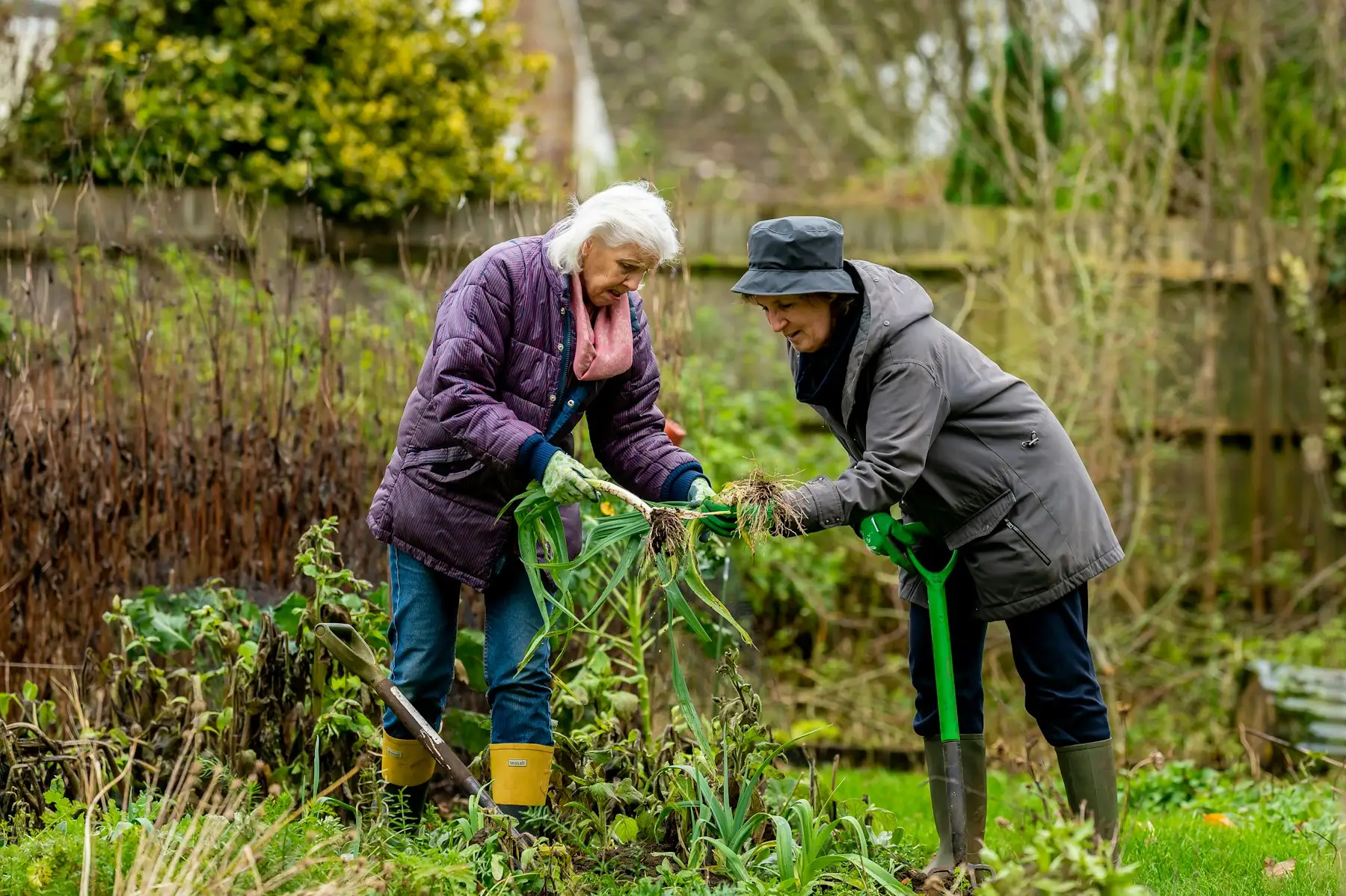 De BoomgaardDay care on an old fruit farm.
De Boomgaard is a fictional day-care centre on an old fruit farm in the invented town of Vlietstad. The website works end to end: you explore a day, book a trial day and then see, as a member of staff, how that booking lands in the day plan.
As a visitor
- Explore a dayChoose interests and a weekday and see a realistic day programme, from morning coffee to the ride home.
- Book a trial dayIncluding transport and food preferences, with a calendar file so the day is not forgotten.
- Places per day for referrersReferrers see where there is room and refer in two minutes, without medical details in the form.
The team sees attendance per day, two minibus routes with pick-up times and new requests. Afterwards a support worker ticks activities and mood, and a warm family message is ready to read through and approve.
See the team sideRead how De Boomgaard is put together. The organisation is fictional and the photos are stock; the way it works is real.
What we check first.
Before we design anything, we go through your current website for the points that are often missed in your sector. With the source alongside.
A referral form without a medical file
In day care, a referral often concerns memory problems or a diagnosis. Health data is special-category personal data under the GDPR, and whoever hosts or forwards the form needs a data processing agreement. We look at which questions a first introduction really needs, and what belongs in the intake conversation instead.
Costs and waiting times clear in advance
If you provide day care as care under NZa rules, for example funded through the Wlz, regulation TH/NR-035 asks you to inform clients before care starts about prices and personal contributions, and to make waiting times clear. Which rules apply depends on the funding. We work that out per organisation and check whether families can find the explanation on the website.
A complaints route families can find
If your day care falls under the Wkkgz, it needs a written complaints procedure, a response within six weeks and membership of a disputes body. The law asks providers to inform clients in a suitable way; a findable web page is the most common way to do it. For day care funded through the Wmo, we look together at the agreements with the municipality.
Readable for older people and their families
Since 28 June 2025 the European Accessibility Act applies to services including e-commerce, with an exemption for organisations with fewer than ten staff and no more than two million euros in turnover. Whether it covers a care registration has not been settled. For your visitors it makes little difference: large enough text, good contrast and buttons that are easy to hit on a phone. We test for that against WCAG.
A question assistant that identifies itself as AI
If a question assistant on your website answers questions about opening hours or transport, Article 50 of the AI Act has required since 2 August 2026 that visitors know they are talking to AI. Family messages drafted by a language model are always checked by a support worker before they are sent.
This is an explanation, not legal advice. Whether a rule applies to your organisation depends on what you provide and how it is funded; we check that together.
How we go about it.
Start small, measure, and only then expand. The same four steps as in your plan.
Introduction
In 25 minutes with Sharif we discuss where registrations or the day itself chafe: with referrers, trial days, transport or families. We look at your current website alongside.
Working session and baseline
We spend a morning with the coordinator, from the first taxi to the coffee round. Together we choose one measure, such as how many phone calls a trial day currently takes.
Prototype
You receive a working trial-day route or referrer page with fictional participants and rides, on phone and computer. Nothing is connected to your planning system or transport company yet.
Test and decide
Support workers, a referrer and a few families try it out. Based on the agreed measure you choose: stop, adjust or extend it to other locations.
Questions we often get.
Can the free places show on the website automatically?
If your planning is kept in a system with a suitable connection, yes. If not, it works with a simple overview the coordinator updates each week. The De Boomgaard example shows what that looks like for a referrer.
Do family messages go out without a check?
No. A language model only drafts a message from what the support worker ticks. The support worker reads it, edits it and approves it. Photos are shared only when the participant and the family agree.
Does this work for a small care farm too?
Yes. A small farm often has no office staff, so a trial day that arranges itself is especially useful there. We start with one page and one route, and only expand when it helps.
Why are there no prices?
Because the scope differs for every organisation. After an introduction you receive a written quote, and nothing is invoiced until you have agreed to it.
Further reading.
Practical guides to the rules above, with sources. The guides are in Dutch.
Websites for other sectors.
Each sector has its own example and its own points to check.
- Websites for home care and community nursingFor home-care organisations and community nursing
- Websites for physiotherapists and physiotherapy practicesFor physiotherapists, group practices and practices with more than one location
- Websites for mental health and psychology practicesFor independent psychologists, psychotherapists and group practices in mental health care
- Website for a dental practice: honest access and clear pricesFor dental practices, dental hygienists and oral care centres
- Website for maternity care: registration, planning and recruitmentFor maternity care organisations and agencies